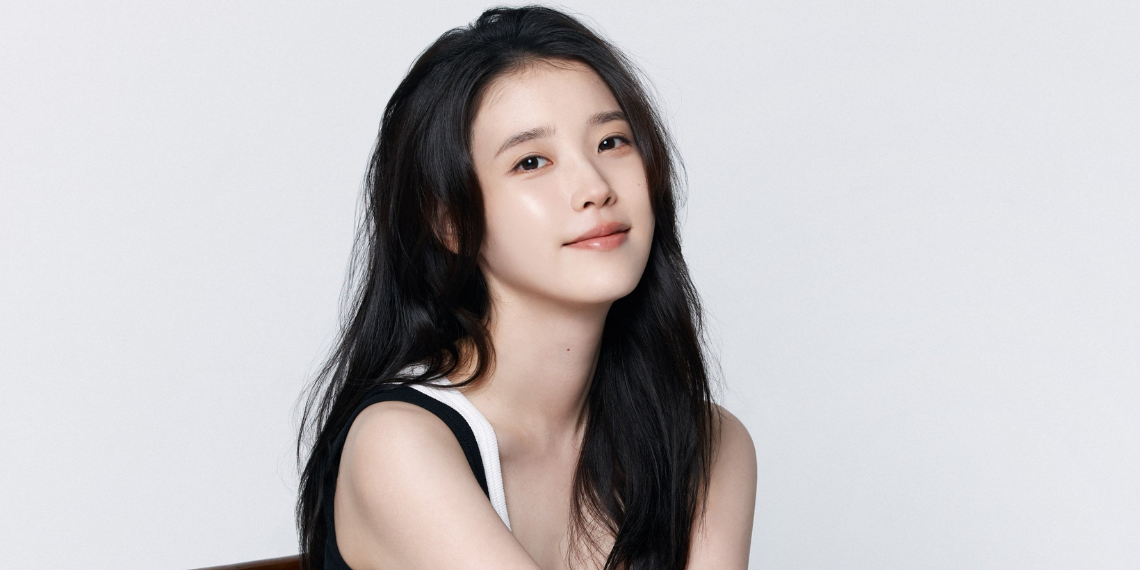
Lee Ji-eun, known to the world as IU, has not only survived as a soloist but has established herself as the definitive gold standard. In an industry heavily dominated by tightly choreographed multi-member groups, standing alone on stage is a massive challenge. Over a career spanning nearly two decades, she has evolved from a label-made teenage idol into a critically acclaimed singer-songwriter, powerhouse actress, and revered cultural icon.
In South Korea’s entertainment landscape, where trends shift with each comeback and public opinion can turn overnight, few figures manage to remain consistently beloved across age groups, professions, and social lines. IU is one of those rare exceptions. Debuting at 15 in 2008, she has grown from a visibly awkward teenage singer into an artist and actress who is routinely referred to as ‘the celebrity’s celebrity’—a performer respected as much by her peers in the industry as by the general public.
Her appeal isn’t built on a single hit or a carefully managed, scandal-free image. It rests on a dual artistry that treats both music and acting as serious crafts, as well as a public persona that feels steady in an industry designed for volatility.
Shattering the Idol Stigma Through Craft

The K-pop idol system has long carried a stigma in Korea: idols are perceived as products of training and marketing, talented but not quite real artists compared to singer-songwriters or actors trained in theater. IU’s career directly challenges that assumption. From her third mini-album, ‘Real’, in 2010, she began taking greater control over her sound, eventually writing and composing the majority of her material. Songs like ‘Palette’, ‘Blueming’, and ‘Love poem’ don’t just showcase a vocalist with technical control and a distinctive tone; they reveal a songwriter interested in specificity, emotional ambiguity, and the small details of adult life.
What makes this matter is the timing and context. IU came up during the second generation of K-pop, when the line between idol and musician was rigid. By producing work that held up outside the idol framework, she forced a reassessment. Critics who might have dismissed idol music began reviewing her albums as standalone pop records. Fellow musicians, from Yoon Jong-shin to Zico, sought her out for collaborations not for clout, but because her musical judgment was trusted.
This is why the label ‘celebrity’s celebrity’ stuck: within the industry, she is seen as someone who does the work.
From Idol Actor to Credible Performer

An essential pillar of IU’s status as a cultural icon is her successful crossover into acting, using her real name, Lee Ji-eun. While many idol-turned-actors face intense public scrutiny, she proved her dramatic weight through highly deliberate project choices.
IU’s acting career followed a similar path of slow credibility-building. Her early roles in ‘Dream High’ and ‘You’re the Best, Lee Soon-shin‘ were standard idol-turned-actor casting, leveraging her fame while keeping her within a safe, familiar range. The shift came with ‘My Mister’ in 2018. Playing Lee Ji-an, a young woman carrying debt and trauma far beyond her years, IU delivered a performance that was quiet, restrained, and devoid of idol mannerisms. The drama was a ratings underdog but became a cultural touchstone, with her performance widely credited as the reason.
She doubled down with ‘Persona’ and ‘Hotel Del Luna’, showing a range between detached mystique and melodramatic intensity. With ‘Broker’ in 2022, she entered the film world under Hirokazu Koreeda, holding her own alongside Song Kang-ho and Bae Doona at Cannes. What stands out isn’t just the diversity of genres—coming-of-age, fantasy, social drama, and indie film—but the consistency of her approach. She avoids overacting, favors understatement, and chooses projects where the character has psychological weight. In doing so, she dismantled the ‘idol acting is shallow’ stereotype in the same way she dismantled the ‘idol music is manufactured’ one.
A Dual Career That Reinforces Itself

The difficulty of maintaining excellence in both fields is why so few manage it. Music and acting demand different rhythms: music requires constant output and touring cycles, while acting requires months of filming and emotional immersion. IU has managed this by treating the two as complementary rather than competing. Her albums often reflect the emotional texture of her acting roles, while her acting choices avoid repeating the singer archetype on screen.
Unlike typical idol music, which often targets a specific fandom, IU’s music is listened to by children, young adults, parents, and grandparents alike. She balances experimental musicality with deeply relatable storytelling, making her songs feel like comforting poetry rather than commercial products. This universal appeal has allowed her to maintain her position at the top of the industry for over fifteen years, a feat rarely seen in the fast-paced K-pop landscape.
Authenticity as the Foundation

IU has avoided major scandals, but more importantly, she has avoided the perception of being manufactured. Her public appearances, interviews, and variety show moments show a personality that is witty, self-aware, and slightly awkward—relatable without feeling overly curated.
Her early songs spoke to teenagers dealing with inadequacy and self-doubt, while her later work addresses loneliness, aging, and the quiet pressures of adulthood. The same person who grew up with her audience now sings about the problems they face a decade later, creating a rare sense of connection.
When senior artists, respected actors, and directors speak highly of her, it signals to the public that her position is earned, not simply based on popularity. In Korea, where hierarchy and seniority still shape public opinion, that endorsement carries weight.
An Irreplaceable Legacy
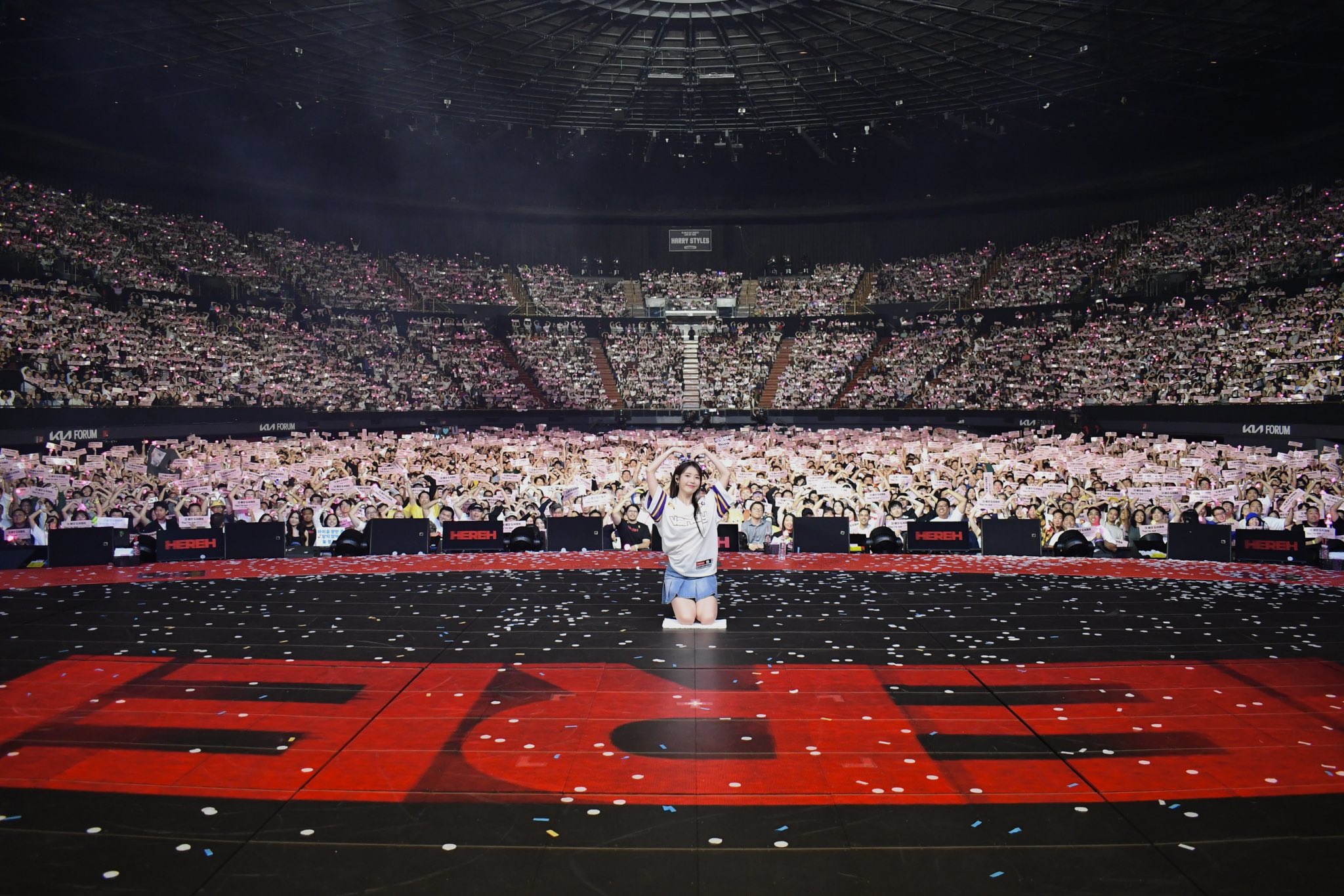
In an environment built for rapid replacement, Lee Ji-eun has made herself difficult to replace. Not because she avoids controversy or chases trends, but because she built a career on the one thing that doesn’t expire quickly: work that holds up on its own terms.
She is a reference point. For younger artists, she’s proof that you can move from idol to auteur. For the public, she’s a constant in a culture of rapid turnover. And for the industry, she’s a reminder that longevity in Korean entertainment still comes down to craft.
IU has achieved milestones that were once thought impossible for a solo female artist in South Korea. In 2022, she became the first Korean female soloist to headline a concert at the Seoul Olympic Stadium, the largest venue in the country.
She has successfully navigated the transition from a manufactured pop star to an independent artist, using her platform to speak honestly about mental health, aging, and human connection. By prioritizing artistic integrity, treating her staff with dignity, and consistently delivering timeless music, she has created a blueprint that modern soloists aspire to follow. IU did not just adapt to the K-pop industry; she expanded her space within it, solidifying her place as an irreplaceable cultural figure.
Written by: Shifna Sherin P
Connect with us on Instagram | X | YouTube for more content, interviews, & news.