As the weather turns crisp and the leaves paint the streets red and gold, autumn in Korea often feels like a season made for K-Dramas. It’s a time when emotions deepen, stories slow down, and quiet moments say more than words ever could. From heartwarming small-town tales to stories of self-discovery and love, many K-Dramas perfectly capture this mellow beauty of fall—not just through their visuals, but even in their titles.
Let’s take a look at some of those dramas that wrap the autumn season in their names, meanings, and moods, each teaching us something new, both in Korean and in life.
1. 가을동화 (ga-eul-dong-hwa) – Autumn in My Heart

The title itself is pure poetry. 가을 (ga-eul) means ‘autumn,’ and 동화 (dong-hwa) means ‘fairy tale.’ Together, they form ‘Autumn Fairy Tale.’ The drama’s soft melancholy and emotional depth mirror the season it’s named after. Like falling leaves (낙엽, nak-yeop), it reminds us that even the most beautiful things don’t last forever—and that’s what makes them unforgettable.
Vocabulary to Remember
- 가을 (ga-eul) – autumn
- 동화 (dong-hwa) – fairy tale
- 낙엽 (nak-yeop) – fallen leave
2. 동백꽃 필 무렵 (dong-baek-kkot pil mu-ryeop) – ‘When the Camellia Blooms’

동백꽃 (dong-baek-kkot) is the ‘camellia flower,’ which blooms between late autumn and early winter. It is a perfect symbol of resilience and love that survives the cold. The title literally means ‘When the Camellia Blooms.’ Here, 필 (pil) means ‘to bloom,’ and 무렵 (mu-ryeop) means ‘around the time.’ The story unfolds in a small town where love and warmth slowly take root. Just like the camellia, the drama teaches that even when life feels chilly (쌀쌀하다, ssal-ssal-ha-da), kindness can still bloom.
Vocabulary to Remember
- 동백꽃 (dong-baek-kkot) – camellia flower
- 필 (pil) – to bloom
- 무렵 (mu-ryeop) – around (the time when)
- 쌀쌀하다 (ssal-ssal-ha-da) – to be chilly
3. 나의 해방일지 (na-eui hae-bang-il-ji) – ‘My Liberation Notes’
![JTBC 'My Liberation Notes' Teaser Poster 3 [Lee Min Ki, Kim Ji Won, Son Seok Gu, Lee El; Premieres April 9] : r/KDRAMA](https://preview.redd.it/jtbc-my-liberation-notes-teaser-poster-3-lee-min-ki-kim-ji-v0-pzsqel5wenm81.jpg?auto=webp&s=439d42b127a0c1716ba3ec7be48da15636a3f9f7)
Here, 해방 (hae-bang) means ‘liberation’ or ‘freedom,’ and 일지 (il-ji) means ‘journal’ or ‘notes.’ The title reflects the quiet, inward journey of the characters as they long to be free from their everyday burdens. Much like autumn, a season of letting go, this drama feels like opening your window to a soft breeze (바람, ba-ram) that whispers, “What do you want to free yourself from?”
Vocabulary to Remember
- 해방 (hae-bang) – liberation, freedom
- 일지 (il-ji) – journal, notes
- 바람 (ba-ram) – wind, breeze
4. 로맨스는 별책부록 (ro-maen-seu-neun byeol-chaek-bu-rok) – ‘Romance is a Bonus Book’

The title plays with the idea of life as a story and love as the unexpected “bonus chapter.” 별책부록 (byeol-chaek-bu-rok) literally means ‘a supplement or an extra booklet added to a magazine.’ The drama’s cozy book-publishing setting, warm color tones, and gentle storytelling make it the perfect watch for an autumn afternoon. Like a good book (책, chaek), it reminds you that some of life’s best stories come unplanned.
Vocabulary to Remember
- 로맨스 (ro-maen-seu) – romance
- 별책부록 (byeol-chaek-bu-rok) – bonus booklet, supplement
- 책 (chaek) – book
- 출판사 (chul-pan-sa) – publishing company
5. 날씨가 좋으면 찾아가겠어요 (nal-ssi-ga jo-eu-myeon cha-ja-ga-get-seo-yo) – ‘When the Weather is Fine’
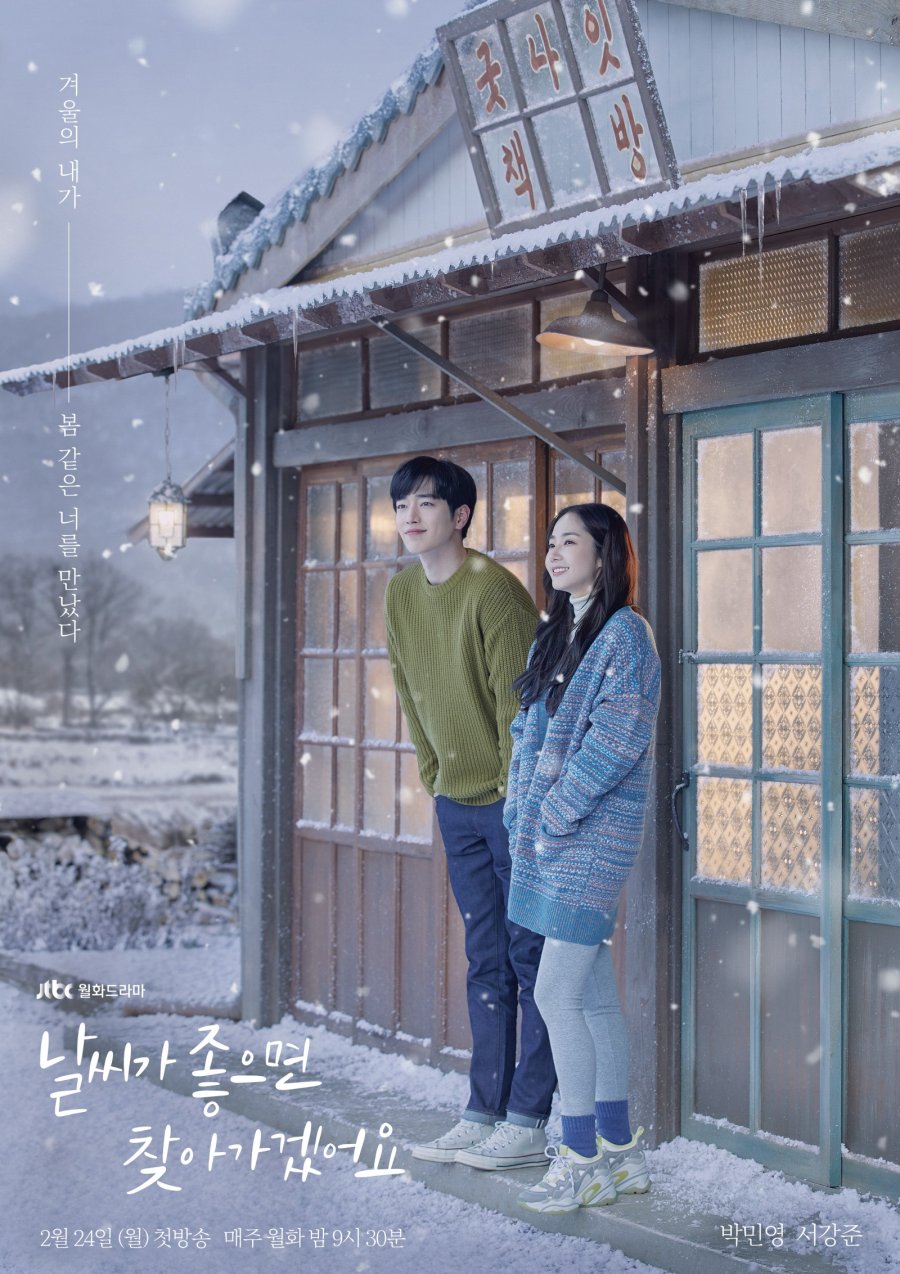
This long but lovely title translates to ‘I’ll Go to You When the Weather Is Nice.’ 날씨 (nal-ssi) means ‘weather,’ 좋으면 (jo-eu-myeon) means ‘if it’s good,’ and 찾아가다 (cha-ja-ga-da) means ‘to go visit.’ The phrase itself feels like a soft promise—one that carries the warmth (따뜻함, tta-tteut-ham) of autumn despite the chill outside. With its quiet countryside setting and gentle healing themes, this drama captures the peaceful solitude of late fall.
Vocabulary to Remember
- 날씨 (nal-ssi) – weather
- 좋으면 (jo-eu-myeon) – if it’s good
- 찾아가다 (cha-ja-ga-da) – to visit, to go see
- 따뜻함 (tta-tteut-ham) – warmth
Each of these titles holds a piece of Korea’s autumn—whether it’s through love that lingers like sunlight, emotions that fall like leaves, or quiet moments that remind us of home. As you learn words like 가을 (ga-eul), 동백꽃 (dong-baek-kkot), 해방 (hae-bang), and 날씨 (nal-ssi), you’re not just learning Korean—you’re learning how language captures feeling.
So, grab a cup of tea (차 한잔, cha han-jan), wrap yourself in a blanket, and let these dramas teach you the warmth of autumn, one Korean word at a time.
다음에 또 만나요! (da-eum-ae tto man-na-yo) or See you next time!
Written by Surabhi
Connect with us on Instagram | X | YouTube for more content, interviews, & news.