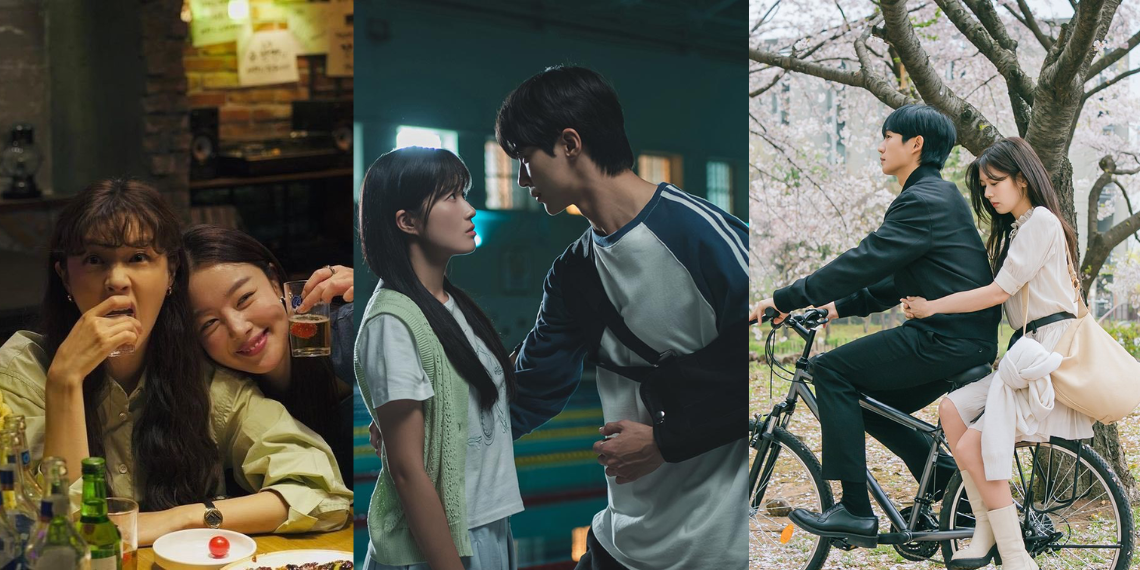
There was a time when K-dramas were hugely popular with certain audiences but largely unnoticed by others. Today, they are everywhere — trending on Netflix, featured on the homepages of major streaming platforms, and dominating online conversations. What once began as a niche interest has now evolved into a mainstream staple.
Gripping storylines, impeccable acting, and high-quality writing have propelled Korean dramas into the spotlight, but it’s the authentic elements that have truly made audiences fall head over heels. These aspects come together as part of a complete package — the K-drama formula, if you will — that has shaped Korean dramas into what they are today. So, let’s take a closer look at some of these defining elements.
The Drinking Culture

In South Korea, drinking culture is the glue that binds people and communities together. Social drinking in the country is as common as food on the table. Even for a casual viewer, it’s easy to see that drinking is a prominent aspect of Korean culture. Soju and beer aren’t just props, they are elements that make scenes feel culturally grounded.
For example, in dramas like ‘Work Later, Drink Now’ and ‘Reply 1988’, shared drinks are used as shorthand for letting loose. Meanwhile, workplace K-dramas use company drinking dinners to showcase hierarchy and power dynamics.
Drinking scenes also highlight a ritualistic side, with specific etiquette and rules centered on respect and hierarchy. You may have noticed how characters often turn slightly away from elders when taking a sip, as drinking directly in front of a senior is considered impolite. It’s also customary not to pour your own drink, instead, people pour for one another as a sign of courtesy and social awareness.
The Quiet Romance

Personally, I believe one element that truly sets Korean dramas apart is their old-school style of romance. Many K-dramas have brought back that innocent, sweet kind of love that gives you butterflies. Dramas like ‘Crash Landing on You’, ‘Come and Hug Me’, and ‘Snowdrop’ are filled with a special kind of intimacy, where even the smallest moments feel significant. There’s the accidental brush of hands, the soft whisper, the lingering eye contact, and the subtle shoulder bump.
Then there’s the classic “loving from afar” trope, where one character is secretly in love while the other has absolutely no idea — which definitely feels like the vibe in ‘Lovely Runner’.
Loud Banter

Loud banter makes everything funnier. In many romantic K-dramas, instead of lengthy romantic monologues, playful banter is often used to build chemistry and connection between the main leads. When the two characters snap at each other, it creates an entertaining dynamic rooted in tension and conflict. It can be loud or chaotic at times, but the relationship often feels more genuine because of it.
Disagreements and arguments between couples in dramas like ‘Hometown Cha-Cha-Cha’, ‘So I Married the Anti-Fan’, ‘Our Beloved Summer’, and ‘Shooting Stars’ show why rivalry-to-romance storylines are so compelling. The couple may clash, argue, and push each other’s buttons, but in the end, a sudden and sincere “I care” gesture can feel especially meaningful and romantic.
In Korean shows, banter is also used to highlight the bond and closeness among family members. Many K-dramas feature at least one loud, dramatic, or over-the-top mother character. If you’ve watched dramas like ‘Welcome to Samdal-ri’, ‘Another Miss Oh’, or ‘Love Next Door’, you’ll notice plenty of mother-daughter banter.
These shows often portray family members as comfortable enough with one another to nag, tease, complain, or snap back at each other.. In one way or another, sibling and parent banter has become a familiar part of the K-drama formula, reflecting both humor and underlying affection within. families.
Cherry Blossom = Romantic Season

Every spring, South Korea turns into a landscape of white and pink during cherry blossom season. With fluffy pink cherry blossoms hanging almost everywhere, many people believe it to be the most beautiful time of the year. Even if you’ve never been to South Korea, you’ll know that cherry blossom season is the unofficial backdrop for love stories in K-dramas.
In the drama world, the spring season often marks the beginning of new relationships. It’s a common trope that involves a kiss, a hug, a romantic reunion, or love blooming under a canopy of cherry blossom trees. Instead of a romantic restaurant overlooking the sea, K-dramas often use spring blossoms as a visual element and a promise that love is about to happen or that a new relationship is about to form.
If you’ve watched ‘Business Proposal’ or ‘Doom at Your Service’, you’ve probably seen petals falling and framing the beginning of a romantic era.
Isn’t it interesting how these small details can carry such big emotions and help define the iconic K-dramas we know today? These elements are part of the whole K-drama package that we’ve fallen in love with. But what about you? What element or detail have you often noticed in Korean dramas?
Written by Diksha Gangadeen
Connect with us on Instagram | X | YouTube for more content, interviews, & news