A Homecoming Beyond the Calendar
In many parts of the world, the New Year is marked by countdowns and fireworks. In South Korea, however, the true beginning of the year arrives quietly, with families returning to their roots and their homes.

Seollal is not simply the beginning of another year. It is a pause in time — a moment when the past and present sit together at the same table. As the Lunar New Year approaches, cities slowly empty while highways fill. People travel long distances, not out of obligation, but out of an unspoken understanding, that some beginnings must be shared.
Home, during Seollal, becomes more than a place – it becomes a feeling.
Honouring the Past Through Charye

One of the most meaningful rituals of Seollal is ‘charye,’ the ancestral rite performed in honor of deceased family members. Families carefully prepare food and bow in respect, expressing gratitude to their ancestors. This ritual bridges generations, reminding younger members that their present exists because of those who came before them.
Sebae: A Bow That Carries Generations of Respect

During Seollal, younger family members perform sebae, a deep formal bow to their elders. In return, elders offer blessings, advice, and sebaetdon (New Year’s money). More than a custom, sebae reinforces the values of humility, respect, and emotional closeness that remain central to Korean family culture.
Tteokguk and the Meaning of Growing Older

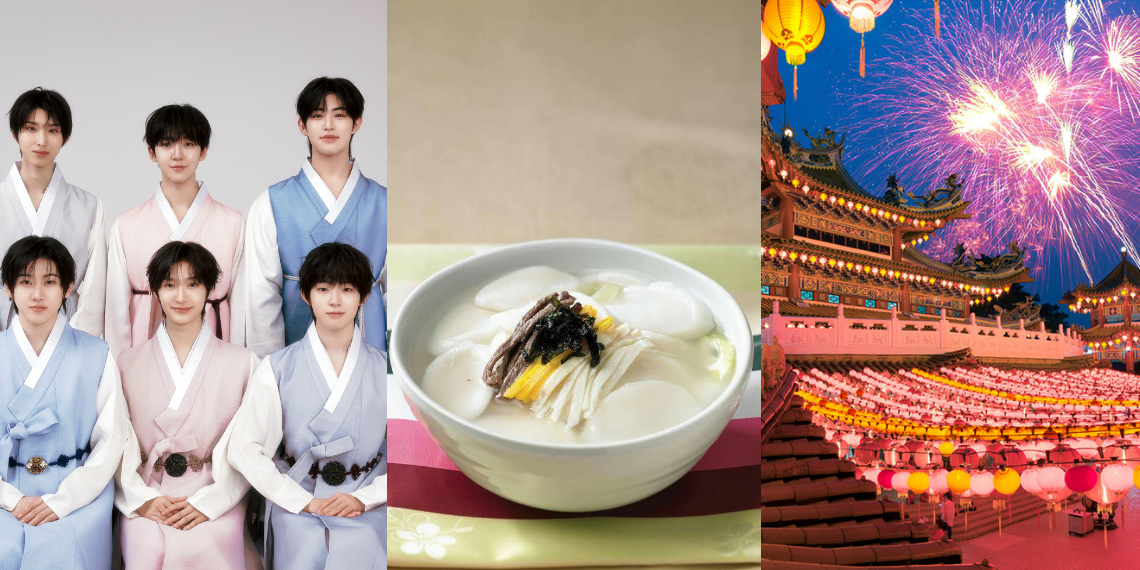
The center of the Seollal table is often marked by tteokguk, a simple rice cake soup whose meaning far outweighs its ingredients. To eat it is to grow one year older, to step quietly into time’s forward motion. Yet this aging does not feel heavy. Shared among family, it becomes a reminder that growing older is not something done alone.
Games, Stories, and Shared Memories

Seollal is also a time for togetherness through play and storytelling. Between rituals and meals, laughter fills the spaces in between. Families gather on the floor to play yutnori, and old stories resurface — memories retold, sometimes unchanged, sometimes softened by time. These are not grand moments, but they are the ones that linger. For children, they become their first memories of belonging; for elders, they are proof that tradition continues.
Seollal in a Changing Society
As Korean society evolves, so do Seollal traditions. Some families simplify rituals or celebrate in smaller gatherings, while others incorporate modern elements. Despite these changes, the emotional essence of Seollal — gratitude, belonging, and reflection — remains unchanged.
Celebrating Seollal Away from Home
For Koreans living abroad, Seollal can be especially emotional. Celebrated far from home, it becomes a moment of cultural preservation and longing, where traditions are kept alive through intention rather than obligation. More than a festival, Seollal is a return — to family, to memory, and to values that resist being hurried by time. It teaches that before moving forward, one must first look back — not in regret, but in gratitude.
Ultimately, Seollal is not merely about welcoming a new year; it is about returning to one’s roots. It is a time to pause, remember, and reconnect with family and heritage. In doing so, it continues to serve as the emotional heart of many Korean families, offering a sense of home that transcends time and distance.
In a world that measures new beginnings by calendars and clocks, Seollal offers something quieter and more enduring: the reminder that time moves best when it moves with people. And that sometimes, starting again simply means coming home.
Wishing you a Happy Lunar New Year!
Written by Trisha Deka
Connect with us on Instagram Twitter YouTube for more content, interviews, & news.