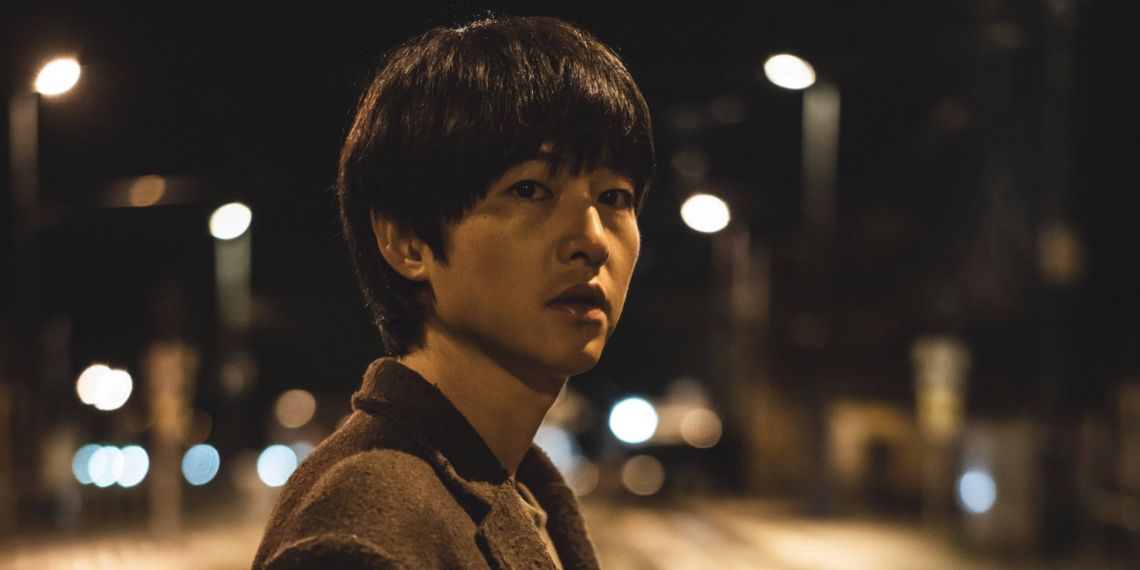
“I vowed to survive no matter what hell I faced. It wasn’t easy but I kept my vow. I’ve made it this far.” – Loh Kiwan
Korean cinema has a unique way of telling stories that linger in the heart long after the credits roll. ‘My Name Is Loh Kiwan’ (2024), directed by Kim Hee-jin and starring Song Joong-ki and Choi Sung-eun, is one such film. Adapted from Cho Hae-jin‘s 2019 novel ‘I Met Loh Kiwan’, this movie explores the journey of a young North Korean defector who seeks refuge in Belgium. Through themes of survival, identity, and human connection, the film delivers an emotionally resonant and thought-provoking cinematic experience.

Movie: My Name Is Loh Kiwan
Where to Watch: Netflix
Cast: Song Joong-ki and Choi Sung-eun
Screenplay & Director: Kim Hee-jin
The Plot
 Loh Kiwan (Song Joong-ki) escapes North Korea with his mother, embarking on a perilous journey through China. During the escape, tragedy strikes—they are separated, and Kiwan loses his mother. Alone and traumatized, he arrives in Brussels, Belgium, as an undocumented refugee. Stripped of identity, home, and family, Kiwan faces the harsh reality of survival: navigating cold streets, sleeping in cramped shelters, taking on odd jobs, and confronting societal invisibility. Every day is a test of endurance, as he clings to the promise he made to his mother—to survive, no matter the cost.
Kiwan begins working at a factory, where he meets Seon-ju (Lee Sang-hee), a fellow Korean-Chinese worker. Initially, Seon-ju guides Kiwan through the challenges of factory life, offering advice and support. However, when her visa and her family’s well-being are threatened, she betrays Kiwan in court, jeopardizing his refugee application. Eventually, Seon-ju redeems herself, helping Kiwan gather the evidence and documents crucial for proving his refugee status, illustrating the nuanced complexity of trust and loyalty in a foreign land.
Amid his struggles, Kiwan encounters Marie (Choi Sung-eun), a former national-level athlete whose life has unraveled due to grief, addiction, and mounting debt. Their first meeting is tense—Marie steals Kiwan’s wallet, the last tangible memory of his mother—sparking conflict. But as they continue crossing paths, a fragile connection begins to form. Kiwan shows patience and care, helping Marie confront her addictions and the dangerous debts that tie her to the criminal underworld, including Cyril, a gangster and her former coach who exploits her vulnerability. In return, Marie introduces Kiwan to parts of life beyond survival, and her presence helps him regain a sense of emotional connection.

As the story progresses, Kiwan grapples with the constant tension between hope and despair. He works tirelessly to prove his refugee status, confronts betrayal, and navigates the moral complexities of his surroundings. Marie struggles with guilt, addiction, and the fallout from her choices, but Kiwan’s presence gradually helps her rediscover self-worth and trust. Together, they become each other’s anchor, finding solace in shared pain and resilience in one another.
At the end, Kiwan writes a letter to Marie’s father, explaining that he has given up his Belgian citizenship and refugee status to avoid being tied to a single place, embracing freedom over security. The final scene transports viewers to Amsterdam, where Marie works near the beach. Their eyes meet across the sand, and they run toward each other, embracing tightly—a moment of catharsis, hope, and the promise of a future together despite the scars of their pasts.
The Characters
Loh Kiwan (Played by Song Joong‑ki)
 A young defector whose name becomes his mantra. Kiwan carries his mother’s dying wish, the weight of displacement, and a longing for belonging. He ventures into the unknown, confronting not only winter streets and empty beds, but the emotional prison of “having no name” in a foreign land. His resilience doesn’t come from grand heroics—it comes from small acts of survival, humility, and compassion.
Marie (Played by Choi Sung‑eun)
 Once celebrated, now broken: Marie’s journey is one of despair as much as redemption. Grief has led her into addiction and dangerous debts. She is cynical, self‑destructive, yet beneath it all there remains a spark of what she once was. Her interactions with Kiwan push her into confrontation with her darkest impulses and open her up to vulnerability and hope
Supporting Characters
Kiwan’s Mother: Though absent physically, she remains the emotional anchor driving Kiwan’s survival.
Seon‑ju (Played by Lee Sang-hee)

Initially helps Kiwan navigate the factory and adapt to life in Belgium, then betrays him to protect her own visa and family, and later redeems herself by assisting him in gathering critical evidence for his refugee case. Her arc highlights the complexities of trust, loyalty, and human solidarity.
Cyril- the Bar Owner : Represents the criminal underworld exploiting vulnerable individuals, including Marie and Kiwan.
What Makes ‘My Name Is Loh Kiwan’ Stand Out

- Visually striking storytelling: The film captures the cold, isolating streets of Brussels and the cramped spaces of Kiwan’s early survival, immersing viewers in the refugee experience. Every frame communicates both hardship and fleeting moments of human warmth.
- Nuanced performances: Song Joong-ki delivers a masterclass in subtlety, portraying Kiwan’s quiet resilience and inner turmoil. Choi Sung-eun brings depth to Marie’s struggle with addiction and grief, balancing vulnerability with a hard-earned strength.
- Emotionally resonant narrative: The movie authentically portrays trauma, loss, and survival of refugees and immigrants while threading in hope, redemption, and the transformative power of human connection.
- Compelling character arcs: From Kiwan’s journey from nameless outsider to hopeful survivor, to Marie’s battle with addiction and Seon-ju’s redemption, each character grows in ways that feel earned and cinematic.
- Memorable cinematic moments: From intimate close-ups highlighting fear and longing, to sweeping shots of Brussels and Amsterdam, the cinematography heightens both isolation and connection, making the story feel immediate and cinematic.
Final Take
 ‘My Name Is Loh Kiwan’ is more than a survival movie—it’s a story of redemption, human connection, and the courage to keep moving forward. The film’s ending, with Kiwan and Marie reuniting in Amsterdam, perfectly encapsulates hope after hardship. With powerful performances, an emotionally layered narrative, and heartfelt storytelling, this film lingers long after the screen fades to black.
Connect with us on Instagram | X | YouTube for more content, interviews, & news.