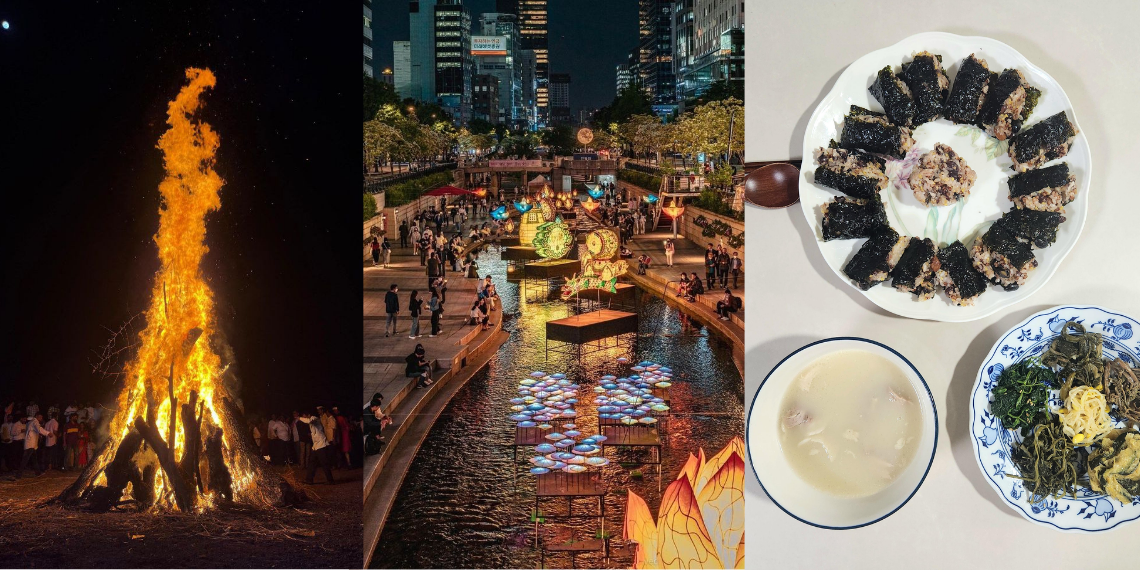
The calendar says March. But in Korea, March means something more. The first full moon of the lunar new year is rising, and with it, ancient fires blaze, lanterns glow, and the nation pauses to make wishes under the brightest night of early spring.
This year, the cosmos has aligned two magical celebrations back-to-back. On March 3, Korea celebrates Jeongwol Daeboreum (정월대보름), the Great Full Moon Festival. While lantern festivals traditionally mark the end of Lunar New Year celebrations across Asia, Korea’s version comes with a fiery twist that will leave you spellbound.
Korea’s First Full Moon Festival: A Night of Wishes, Traditions, and Chestnuts
Jeongwol Daeboreum is Korea’s celebration of the first full moon of the Lunar New Year, falling on the fifteenth day of the first lunar month. In 2026, it falls on Tuesday, March 3. For centuries, this day has been rooted in Korea’s agrarian history. As the first full moon shone above their crops, farmers would gather to wish for abundance in the coming year. Unlike Seollal (Lunar New Year), which is a quieter family affair, Daeboreum is lively, communal, and spectacular.
Think of it as Korea’s original spring festival—a time when villages would come together, light enormous bonfires, play traditional games, and eat special foods designed to bring good health and fortune.
The Fire Rituals: Burning Away Bad Luck
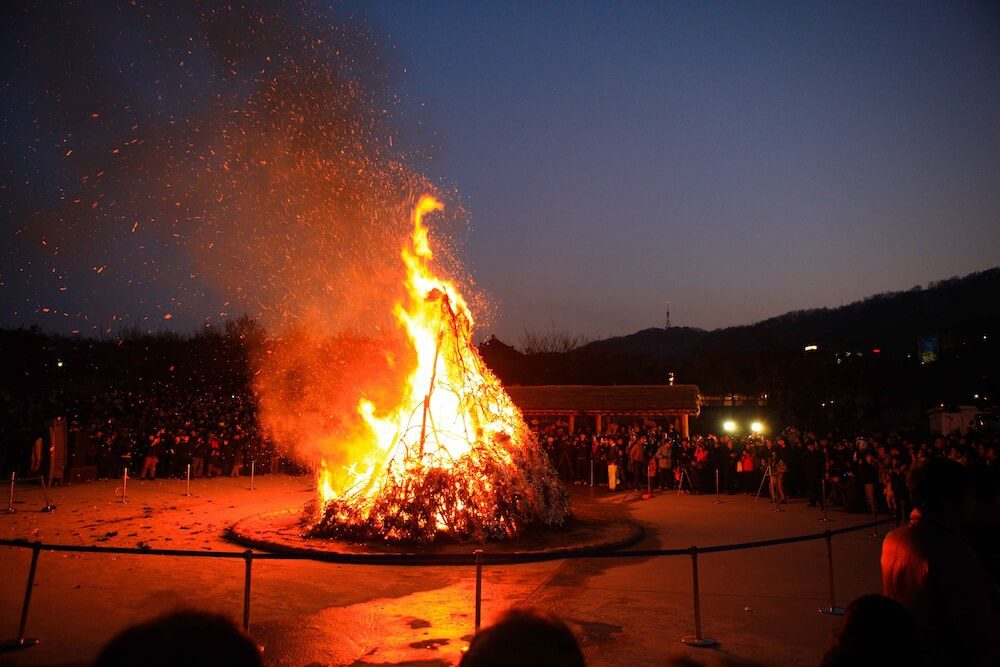
The centerpiece of Daeboreum is Daljip Taeugi (달집태우기), the burning of the ‘moon house.’
Across Korea, communities construct massive structures made of pine branches and straw, often shaped like triangular houses. As night falls and the full moon rises, these daljips are set ablaze. The fire crackles and roars, sparks fly into the night sky, and the smoke carries prayers and wishes upward.
The symbolism is beautiful: the fire consumes the bad luck and misfortune of the past year, making way for fresh starts and good fortune. The louder the crackling, the better the harvest will be.
Where to See It
Busan: The Heart of the Celebrations
Busan transforms into the epicenter of Daeboreum magic, with beaches along the coastline hosting spectacular events.
Haeundae Beach welcomes visitors to its annual Dalmaji Oncheon Festival, where thousands gather as the full moon rises over the water. The atmosphere buzzes with anticipation as families, couples, and friends spread out across the sand, waiting for the moment when flames leap into the night sky. The daljip burning follows the moonrise—a fiery climax that sends sparks dancing above the waves.
Gwangalli Beach hosts the Suyeong Traditional Daljipnori, one of the most culturally rich celebrations. Throughout the afternoon, the beach comes alive with performances of intangible cultural heritage, including Suyeong Yaryu (a traditional mask dance-drama) and Jwasuyeong Eobang Nori (fishing village rituals). As darkness falls, all eyes turn to the massive moon house waiting to be ignited.
Songdo Beach offers a full day of festivities with its Songdo Daljipnori. Before the bonfire lights up the night, visitors can enjoy street parades and traditional folk performances that showcase Korea’s rich cultural heritage. The celebration stretches well into the evening, with the bonfire serving as a glowing centerpiece.
Seoul: Where Tradition Meets the City

The capital offers its own enchanting celebrations, proving that ancient traditions thrive even in a modern metropolis.
Namsangol Hanok Village hosts one of Seoul’s most beloved Daeboreum events. Within the peaceful grounds of traditional hanok houses, visitors can participate in time-honored activities like bureom-kkaegi (cracking nuts for good health) and sample traditional liquors. As dusk settles over the village, the contrast between the historic architecture and the rising flames creates an unforgettable scene. The dramatic daljip burning becomes a moment of collective hope, with wishes whispered into the fire.
Near Seokchon Lake, Seoul Norimadang offers a vibrant celebration featuring thunderous traditional drumming, a ceremonial procession across a bridge for good luck, and a massive bonfire that illuminates the night. The energy here is infectious—strangers become neighbors as they share in the ancient ritual of welcoming spring together.
The Lantern Connection: Light Across Cultures
While Korea’s Daeboreum is centered around fire, the Lantern Festival celebrated elsewhere in Asia falls on the same date—the 15th day of the first lunar month—marking the final day of Lunar New Year celebrations.
In China, Taiwan, and Vietnam, the night is filled with paper lanterns, riddles, and sweet rice balls. In Korea, people burn rather than float, but the symbolism remains the same: light conquering darkness and hope illuminating the year ahead.

Korea has its own lantern magic as well. The Namyangju Romantic Lantern Festival (낭만등불축제) runs through March 2026, offering a dreamy alternative for those who prefer their light a little less fiery. Located on Bulamsan-ro in Namyangju, the festival transforms walking paths into luminous wonderlands through March 31, 2026.
Here, visitors can stroll through corridors of artistic lanterns, sample street food, and even join lantern-making workshops.
Spring Whispers: The Season’s First Signs
March in Korea is when winter loosens its grip and spring begins to stir. The air still carries a chill, especially after sunset, but the days grow longer, and the first blossoms begin to appear.
At the National Museum of Korea, the spring plum blossom exhibition ‘Ipchun Maehyang’ runs through February. From mid-March, however, the ‘Geoulmot Plum Blossom Fragrance’ festival celebrates the blooming plum trees around the museum’s Mirror Pond. Plum blossoms (maehwa) are among the first flowers to bloom in Korea, symbolizing hope, resilience, and new beginnings—perfectly aligning with the themes of Daeboreum.
This is a season of transition. The energy of the full moon, the warmth of the bonfires, and the first hints of spring converge in early March, creating a uniquely Korean moment that feels both ancient and alive.
Tasting the Moon: Daeboreum Foods You Must Try
No Korean holiday is complete without special foods, and Daeboreum features some of the most fascinating culinary traditions.
- Ogokbap (오곡밥): Five-grain rice made with glutinous rice, millet, sorghum, beans, and red beans. Each grain represents abundance and the hope for a bountiful harvest.
- Bureom (부럼): A variety of nuts—such as walnuts, chestnuts, peanuts, and pine nuts—cracked open with your teeth on the morning of Daeboreum. This act is believed to strengthen teeth, prevent skin boils, and bring good luck for the year.
- Gwibalgisul (귀밝이술): “Ear-sharpening wine,” a cold rice liquor traditionally drunk on the morning of Daeboreum. It is believed to help you hear only good news throughout the year.
- Yaksik (약식): Sweet sticky rice mixed with pine nuts, jujubes, and chestnuts—a comforting treat that feels like a hug in dessert form.
Look for these dishes at festival food stalls or traditional markets during your visit.
The Complete March 3-4 Itinerary
Here’s how to experience the best of both worlds:
Tuesday, March 3 (Jeongwol Daeboreum):
- Morning: Start your day by cracking nuts (bureom) for good luck. Visit a traditional market to try ogokbap and gwibalgisul.
- Afternoon: Head to your chosen festival location. In Busan, events kick off as early as 2:00 PM, featuring folk games, performances, and hands-on activities.
- Sunset: As the moon rises (around 6:11 PM in Busan), take part in dalmaji, a moon-greeting ceremony where you can make wishes upon the first full moon.
- Evening: Watch the daljip burn. Feel the heat on your face, listen to the crackling pine branches, and let your wishes rise with the smoke.
Wednesday, March 4:
- Recover from the late-night festivities with a leisurely morning. If you’re near Seoul, consider a day trip to Namyangju’s Romantic Lantern Festival, where the lanterns glow nightly through March, offering a completely different yet equally magical light experience.
- Explore the pathways, snap photos of the illuminated installations, and grab some street food from the vendors.
The Deeper Magic

What makes Jeongwol Daeboreum special isn’t just the spectacle—it’s the sense of community. For centuries, entire villages gathered to share food, play games, and watch the moon together. The well-being of one was tied to the well-being of all.
Today, as you stand among strangers watching flames leap toward the full moon, you’ll feel it too—that ancient sense of belonging, of shared hope, of winter ending and spring beginning.
The lanterns of Namyangju offer a gentler kind of magic: pathways of light, quiet contemplation, and the simple joy of walking through beauty. Together, these celebrations capture something essential about Korea in early March—the balance between fire and light, community and solitude, tradition and the present.
So come for the flames. Stay for the moon. Leave with your wishes burning bright.
Written by Trisha Deka
Connect with us on Instagram Twitter YouTube for more content, interviews, & news.