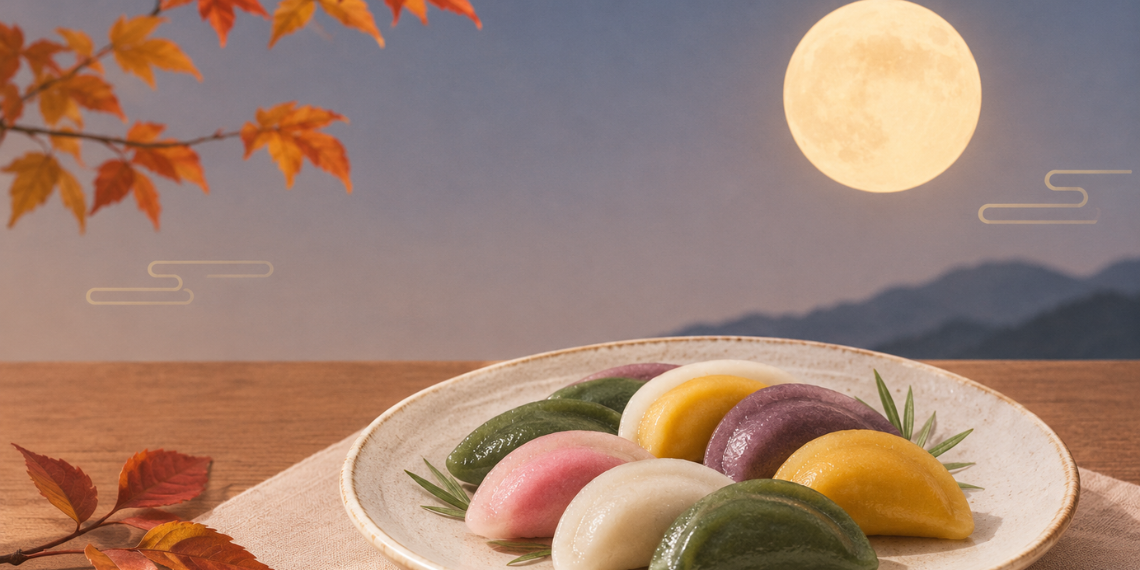
A tiny rice cake, an autumn moon, and the beautiful idea that what is still growing can be worth celebrating…
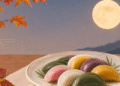
On an autumn evening in Korea, the moon takes centre stage. It rises bright and round above rooftops and mountains, lighting up the sky during one of the year’s most anticipated holidays, Chuseok.
But somewhere beneath that full moon, on a family table, another moon quietly appears. It is smaller, softer, made from rice flour. And unlike the moon in the sky, it isn’t full. It is a crescent.
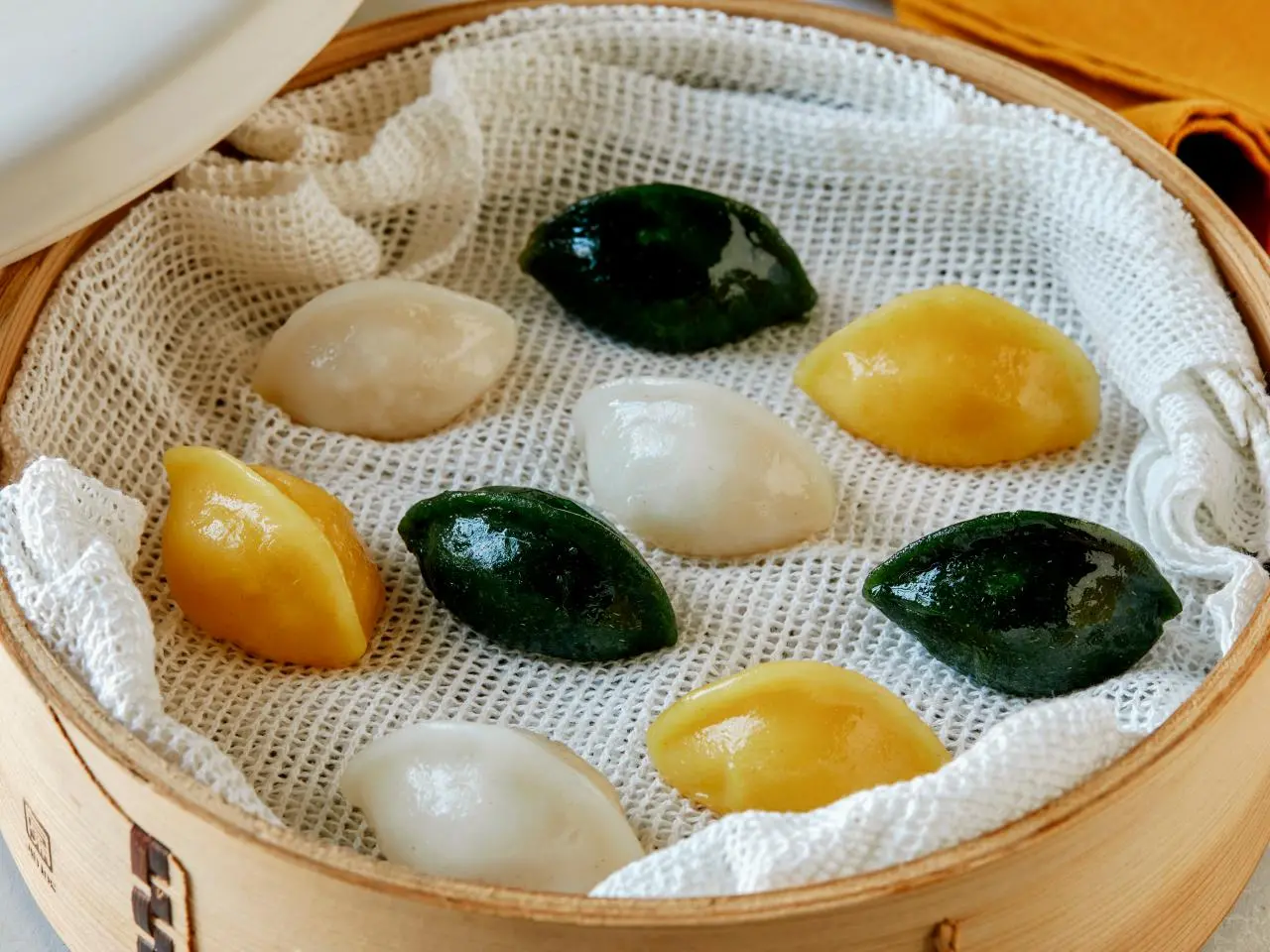
This is Songpyeon, the half-moon-shaped rice cake that has become one of the most recognisable foods of Chuseok. Made by filling rice-flour dough with ingredients such as sesame, beans, or chestnuts and shaping it by hand, songpyeon is much more than something sweet to eat during the holiday.
Its little crescent shape carries a story of its own.
A Full Moon Above, Half-Moons Below
At first, the shape seems almost contradictory. Chuseok is closely associated with the full harvest moon, so why would one of its most beloved foods take the form of a half-moon?
There isn’t a single universally accepted explanation for the shape, but one traditional interpretation links the crescent to growth, prosperity, and the promise of a fuller future. A full moon has reached its brightest, fullest form, while a half-moon is still becoming; perhaps that is precisely the point.
Chuseok is a celebration of the harvest, the moment when the year’s work has finally produced something to be grateful for. But the half-moon leaves a little space beyond that celebration for another harvest, another season, and another year of hopes and possibilities.
The little rice cake becomes a quiet reminder that something does not have to be complete to hold promise.
The Shape of Something Yet to Come
There is something wonderfully hopeful about the idea of celebrating a half-moon. We tend to celebrate things when they are finished: a goal achieved, a journey completed, a harvest gathered. But life rarely arrives in such neat endings. There are always things still growing: dreams taking shape, children becoming adults, relationships changing, and plans waiting for the right moment.
The crescent moon understands this. It is not incomplete because it is half-lit; it is simply on its way to becoming full. Perhaps that is why songpyeon fits so naturally into a festival centred around gratitude. It celebrates what is already here while quietly making room for what is still to come.
When the Kitchen Becomes Part of the Celebration
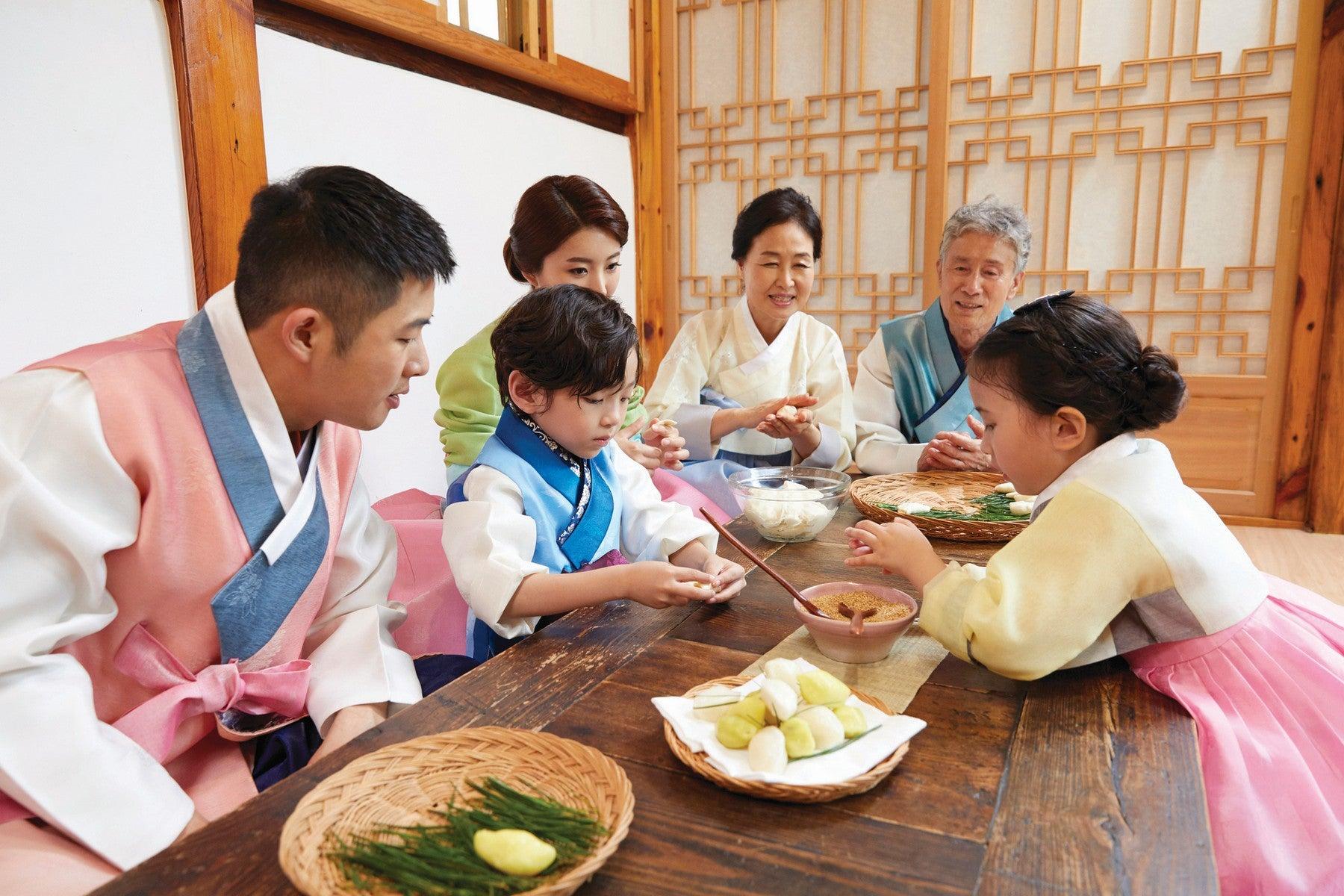
Of course, the story of songpyeon isn’t only about its shape. It is also about the hands that make it.
Traditionally, making songpyeon has been a family activity. During Chuseok, family members gather to prepare the dough, add the fillings, and carefully fold each piece into its familiar crescent shape. It sounds simple, but when a family sits around the same table, food preparation quickly becomes something else.
Someone demonstrates how much filling is actually enough. Someone makes theirs too large, while a child produces a wonderfully uneven little crescent and a grandmother quietly fixes the shape without saying a word. Between the laughter, conversations, and occasional arguments over whose songpyeon looks best, the kitchen slowly becomes more than a place to prepare food. A recipe becomes a memory, and the simple act of shaping rice cakes becomes a quiet way to connect one generation to the next.
No Two Songpyeon Are Quite the Same
Perhaps the loveliest thing about handmade songpyeon is that perfection isn’t really the point. Each one can look slightly different, some neatly shaped, others wonderfully lopsided, while modern versions may appear in soft pastel colours or come with new fillings and flavours. Korean families today celebrate Chuseok in many different ways; some still gather around the table to make songpyeon at home, while others pick them up from markets, bakeries, or specialised shops.
The tradition has changed with modern life, but the little crescent remains. And perhaps that is how traditions survive: not by staying the same, but by allowing every generation to leave a little of itself behind.
A Tradition Shaped by Many Hands
There is something almost poetic about passing songpyeon from one generation to the next. A child learns by watching, then makes a first attempt of their own, perhaps a little uneven at first. Years later, that same child may find themselves sitting beside someone younger, showing them how to fold the dough. The recipe may remain familiar, but the people around the table keep changing.
Somewhere in that simple rhythm, a rice cake becomes a small archive of family life, holding the memory of the hands that shaped it years ago, the stories shared around the kitchen table, and the comfort of doing something together year after year.
When the Moon Rises
By the time the Chuseok moon appears, the songpyeon are ready to be shared. The kitchen has quietened, the table is full, and those little handmade crescents sit among everything else prepared for the celebration.
Perhaps that is what makes songpyeon so special. Its story isn’t really about making the perfect rice cake. It is about the hands that make it, the people sitting beside you, and the memories that quietly gather around the table.
For someone discovering Chuseok from afar, it may simply look like a beautiful Korean tradition. But behind every little songpyeon is something wonderfully familiar: the feeling of making something together, learning from someone you love, and returning to a tradition that has been waiting for you year after year. And maybe that is the sweetest part. Long after the last songpyeon disappears from the table, the memory of making them together can stay. Because sometimes, the things we shape with our hands are also the things that shape our memories.
Happy Chuseok!
Written by: Trisha Deka
Connect with us on Instagram | X | YouTube for more content, interviews, & news.